Recently I
took part in an event at the
University of Derby called ‘Foot in the Door’, a
panel-based workshop aimed at aspiring writers, with a view to providing
practical information on making writing a career.
It was a
really cool event, and I think a lot of the students (not just from the
university) got something very worthwhile out of it.
Some of
the questions put to the panel crop up regularly in any writer’s life, and I
think it’s worth sharing some of the discussion here. Note that these aren’t
just my responses, but a general consensus between myself and fellow panellists
Anne Zouroudi and
Jane Linfoot.
How did you first come
to be published?
There are quite a few variations on this theme, and we
all agreed that you can ditch the usual protocols if you plan on exploring
digital routes to market, or even if you’d rather work on licenced fiction
(like novelizations of movies, or Games Workshop’s Black Library imprint, for
instance). But the usual way to get published is this:
1.
Write
a full manuscript. Finished, edited, polished as best as you can make it, and
make sure other people have read it and that you’ve listened to their feedback.
2.
Only
when that’s done can you start to look for an agent. Buy the latest copy of the
Writers & Artists’ Yearbook. Identify a handful of agents (maybe half a
dozen to start with) who are specialists in your chosen genre. Follow their
submission guidelines VERY carefully to avoid ending up in the trash. If they
want a covering letter/email, spellcheck it to death. If they want 3 chapters,
don’t send them the whole book, and so on.
3.
Give
the first batch of agents a reasonable length of time (up to 3 months) before
submitting to further agents.
4.
Do
not take rejection personally – fiction is subjective, and it’s all part of the
learning curve. I had one well-known agent tell me
the Lazarus Gate was ‘boring’. The very next week I had two other
agents say they loved it and were interested in seeing more.
5.
If
you have more than one offer, pick the agent you like the best, but also bear
in mind their stable of authors. Check the contract. Sign on the line. And wait…
The agent will go away and sell your book. It might take a week. It might take
a year. You might get offered a six-figure sum. Most likely it’ll be four.
Patience, padawan. Your time will come.
Was there a change in
attitude – necessary or voluntary – that you had to take once your first book
was out?
God, yes.
Once book one is edited and prepping for publication, there’s a very good
chance you’ll already be writing book two. Now it all gets very real: whether
you’re a full-time writer, or propping up the writing with a full-time job, you
need to hit your deadlines. Worst-case scenario, there are financial penalties
for being late (although they are rarely enforced, best not push it by being
unreliable).
Most
people write their first book in their spare time. It takes ages (Lazarus took
me 2 years). But when you sign a multi-book deal, publishers want one book a
year, same time every year. No excuses. Get cracking. NOW!
I worked
in magazines for nearly 15 years before becoming a full-time writer. That means
I feed off the energy of deadline week. But if you’re the kind of person who hates
pressure, then the best favour you can do yourself is to get organised, and
write steadily rather than do it all in a frenzy at the end.
How did you find that
marketing side of things once the book was released? Is there any advice you
would give to aspiring authors in that respect?
Be prepared to spend a *lot* of time promoting the book.
Publicists might support and facilitate, but they won’t do it for you. In this
day and age writers need a social media presence. You’ll probably be invited to
panels, and readings, and book launches. As most writers are introverts at
heart, this bit can be terrifying. Thankfully, event organisers and more
experienced writers will almost always take you under their wing, and honestly,
you might never grow to love it, but you’ll learn how to do it, and that’s nine
tenths of the battle.
One note that came up: Also be prepared for sales
department pressure on your book content, sometimes more so than editorial.
Comments like ‘readers really liked that character, can you bring him back from
the dead in the next book please?’ are sadly all-too common. And not always negotiable…
Is there anything about
being a professional, published author that has come as a real surprise?
Multiple contracts are no guarantee of further contracts –
it’s absolutely true that you’re only as good as your last book. Think several
books ahead – where is your next sale going to come from?
What words of advice you
would give to authors looking to get published and established?
My word of advice was this: It’s very hard to get rich in
the writing game these days. The days of the ‘mid-list-author' are pretty much
finished, and it’s quite telling that many of the superstar novelists we know
today have been superstar novelists for decades – they made it big when it was
still fairly commonplace to do so, and the marketplace wasn’t so packed. This
isn’t meant to be negative: there’s still room to carve your niche. But don’t
write just to make money. You’ll only end up following trends and writing stuff
you think will sell, rather than make good art. Write what you’d like to read,
and what you’re inspired by, and you’ll find an agent and editor who love it
and are also inspired by it.
There you
have it – a whistle-stop round-up of the discussion, and only my personal recollections.
Similar events take place up and down the country on a fairly regular basis. If
you’ve been thinking seriously about turning writing into a career, I’d highly
recommend checking them out.


 Whistle and I’ll Come to You (1968)
 Adapted from the 1866 Dickens short story, this is
another of Andrew Davies’ BBC Ghost
Stories for Christmas, and one that I love more than is reasonable. This is
the film I watch in front of a fire, with a glass of scotch in hand and the dog
curled up next to me. It’s an intimate performance, carried by two brilliant
actors in Denholm Elliott and Bernard Lloyd, with such a great atmosphere. Like
most of the series, it’s quite a slow, gentle haunter, with just a few momentary
blasts of violence.
Adapted from the 1866 Dickens short story, this is
another of Andrew Davies’ BBC Ghost
Stories for Christmas, and one that I love more than is reasonable. This is
the film I watch in front of a fire, with a glass of scotch in hand and the dog
curled up next to me. It’s an intimate performance, carried by two brilliant
actors in Denholm Elliott and Bernard Lloyd, with such a great atmosphere. Like
most of the series, it’s quite a slow, gentle haunter, with just a few momentary
blasts of violence.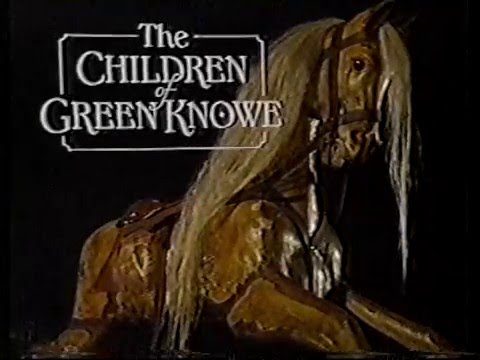 The Children of Green Knowe (1986)
 Regular readers of the blog will know already that I
really like this ITV adaptation of Susan Hill’s novel (far more than the
big-budget Hammer remake). It doesn’t have the money for flashy effects, so it
uses great locations, costumes, music and camerawork to promote a really chilling
atmosphere – it’s certainly the most outright scary movie on this list. And it
contains, of course, ‘that’ scene, which gave me nightmares as a kid. Sadly,
due to a dispute with Susan Hill, this version is no longer available to buy,
but you can watch it here.
Regular readers of the blog will know already that I
really like this ITV adaptation of Susan Hill’s novel (far more than the
big-budget Hammer remake). It doesn’t have the money for flashy effects, so it
uses great locations, costumes, music and camerawork to promote a really chilling
atmosphere – it’s certainly the most outright scary movie on this list. And it
contains, of course, ‘that’ scene, which gave me nightmares as a kid. Sadly,
due to a dispute with Susan Hill, this version is no longer available to buy,
but you can watch it here. Scrooge (1951)


 The Artist’s true name is Tsun Pen, and his namesake is
Ts’ui Pên, the ancestor of Doctor Yu Tsun from The Garden of Forking Paths. This story had a profound influence
on The Lazarus Gate far
beyond the character of the Artist; the uncanny string of coincidences that
leads John to the Artist, the circle of circumstance that makes the Artist able
to interpret all fates but for his own, and the strange environs of the House
of Zhengming, are all inspired by Ts’ui Pên’s great work—a hypertextual novel
that represents his unnavigable, infinite labyrinth. It’s a strange and
wondrous short story, as trippy as a trip to Tsun Pen’s opium den…
The Artist’s true name is Tsun Pen, and his namesake is
Ts’ui Pên, the ancestor of Doctor Yu Tsun from The Garden of Forking Paths. This story had a profound influence
on The Lazarus Gate far
beyond the character of the Artist; the uncanny string of coincidences that
leads John to the Artist, the circle of circumstance that makes the Artist able
to interpret all fates but for his own, and the strange environs of the House
of Zhengming, are all inspired by Ts’ui Pên’s great work—a hypertextual novel
that represents his unnavigable, infinite labyrinth. It’s a strange and
wondrous short story, as trippy as a trip to Tsun Pen’s opium den…
